
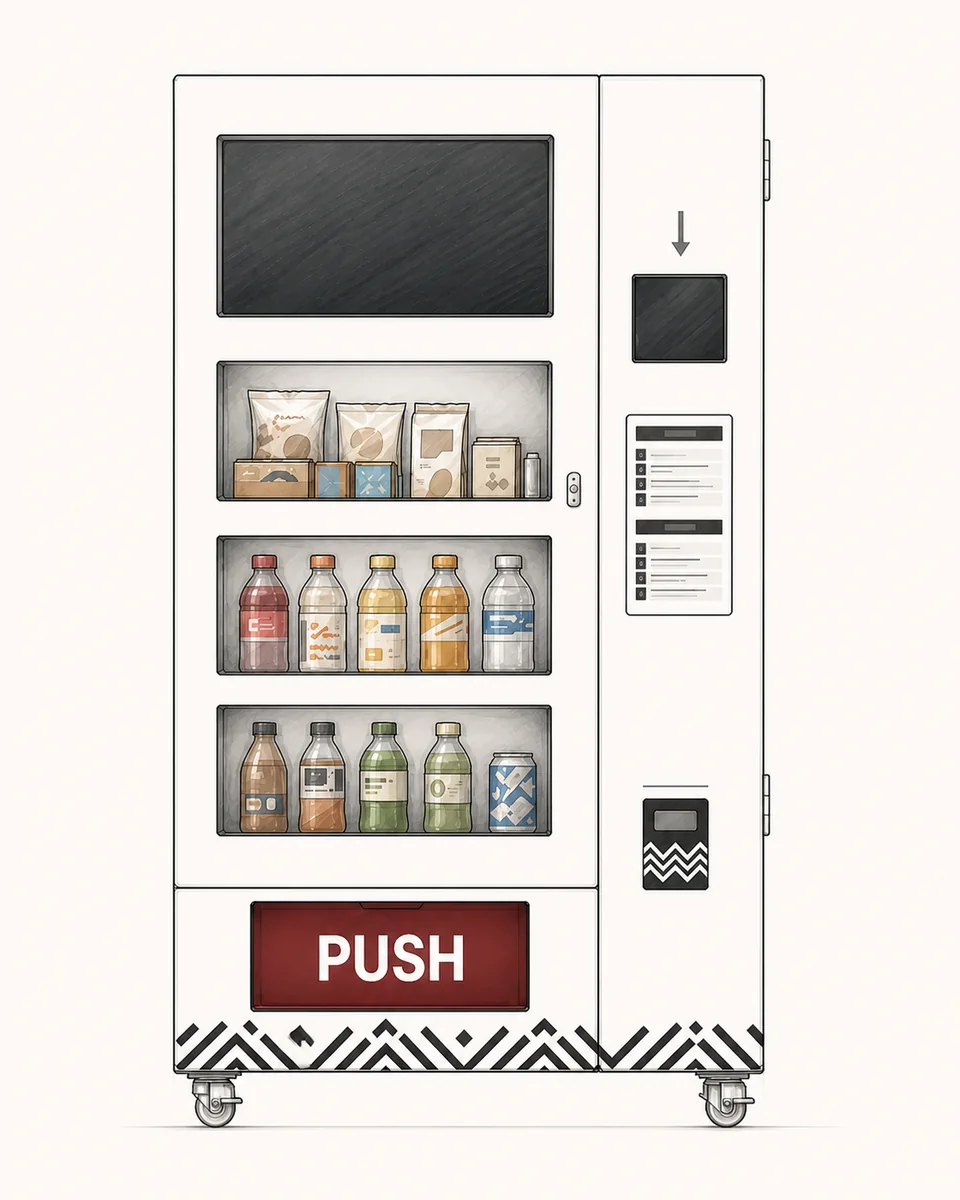
Machine size and capacity
A compact machine with a limited assortment has different material, mechanism and control requirements from a larger refrigerated machine. Capacity affects enclosure size, the number of dispensing channels, transport and the amount of stock tied up in each location.
Product compatibility
Bottles, cans, snack packets and small packaged goods require different bay dimensions and dispensing approaches. A configuration that must handle many package shapes may require more adjustment, testing or specialised mechanisms.
Refrigeration and power
Cooling adds equipment, energy consumption and maintenance requirements. The required temperature range, local environment, insulation and product load all influence the system. Ask whether the quoted price includes the correct cooling configuration rather than assuming every vending machine is equivalent.
Touchscreen and customer interface
Display size, touch hardware, protective mounting and the customer software experience contribute to price. A useful interface must remain clear in the location where it will operate and should make payment and recovery from errors understandable.
Payment system
Coin and note mechanisms, bank-card terminals and Mobile Money integration have different hardware, transaction and support requirements. In Rwanda, a Mobile Money workflow can avoid cash handling but still requires reliable payment confirmation and reconciliation with dispensing.
Connectivity and software
Remote inventory, transaction records, status monitoring and administration turn a cabinet into a connected operating system. Clarify which tools are included, whether ongoing service charges apply and who owns responsibility for connectivity.
Imported cost versus local capability
An imported machine may include freight, insurance, duties, inland transport and installation. It may also create future costs if spare parts or specialist support are difficult to obtain.
Local manufacturing does not mean every component is made locally. It can reduce some logistics and support friction by keeping product design, integration, assembly and service capability close to the operator. Compare whole-life operating cost, not only the invoice for the cabinet.
Installation, training and maintenance
Site assessment, transport, electrical preparation, commissioning, operator training, warranty terms and maintenance may be included or priced separately. Ask for a clear scope so two quotations can be compared fairly.
Buying versus leasing
A purchase concentrates more cost upfront and may suit an operator that wants long-term control. Leasing can reduce the initial commitment but creates recurring cost and contractual responsibilities. Compare the total term, included support and end-of-term position.
Moota Labs does not publish a universal Drifter price because configurations and commercial models vary. Contact the team with the venue, intended products and preferred operating model for a current discussion.
This guide provides general commercial and operational information, not a promise of earnings or a substitute for evaluating a specific site and agreement.