
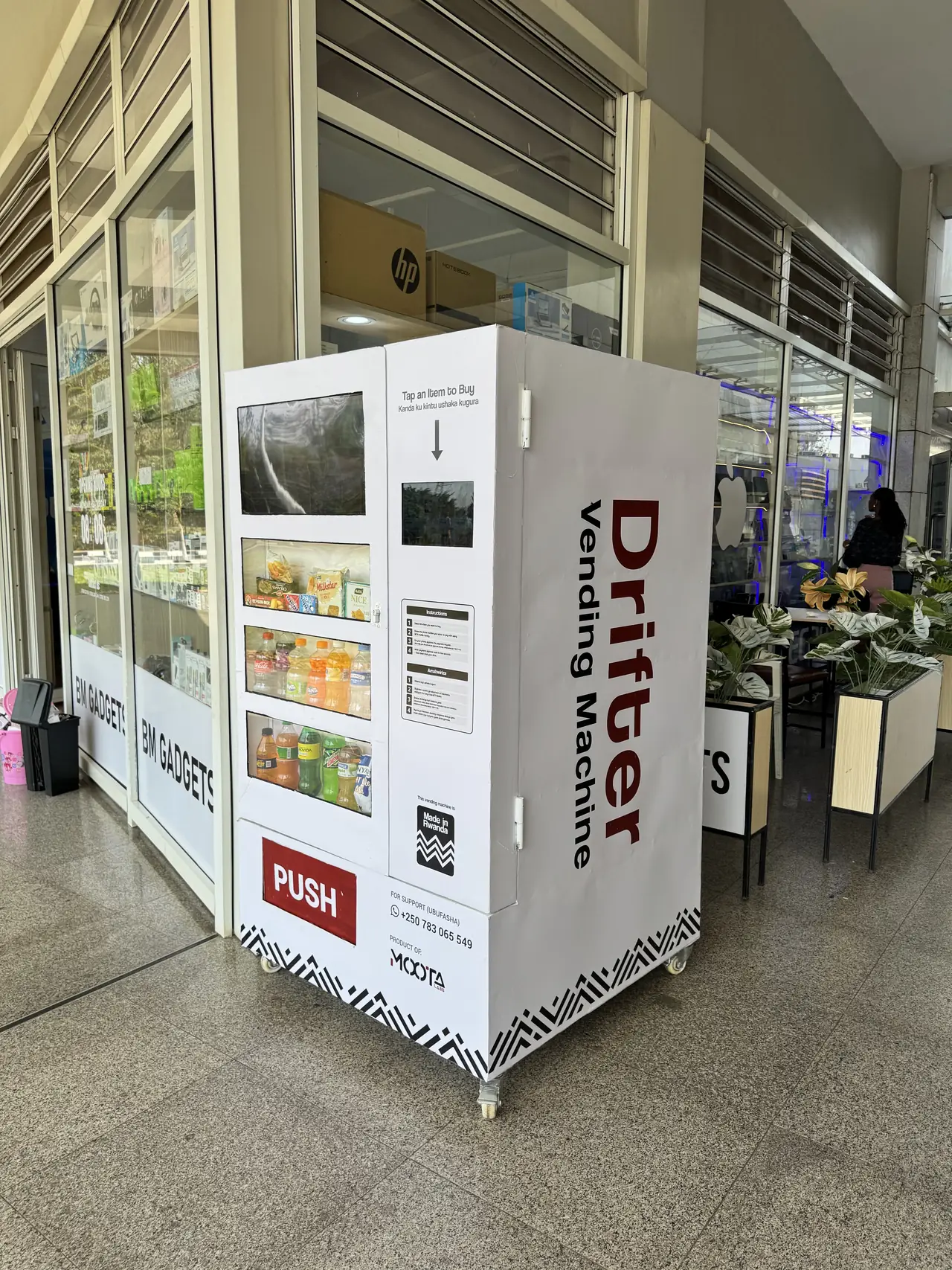
1. Find the right location
Foot traffic is only the beginning. A good vending location has the right people, enough time for them to notice and use the machine, convenient access and a reason to buy when staffed alternatives are unavailable or inconvenient.
Offices, universities, factories, hospitals, residential buildings, gyms and transport areas can work, but each behaves differently. Observe the audience, operating hours, security, electricity, nearby shops and how easily the machine can be restocked.
- Repeat users rather than one-time passers-by
- Useful dwell time near the machine
- Limited or inconvenient alternatives
- Safe access for customers and restocking
- Reliable power and Mobile Money connectivity
2. Choose products for the people on site
Build the first product mix around the location rather than personal preference. Office workers may value water, drinks and quick snacks; a campus may need affordable price points and more variety; a gym may favour hydration and selected nutrition products.
Track selling price, supplier cost, package dimensions, shelf life and gross margin for every item. Start focused. A smaller range that sells consistently is more useful than a full machine containing slow-moving stock.
3. Choose the right machine
Compare capacity, product compatibility, refrigeration, payment methods, reliability, monitoring and local service, not only purchase price. Confirm that the dispensing system handles your actual package sizes and that operators can access the parts they need to clean and restock.
In Rwanda, local technical support can materially reduce downtime. A machine that cannot be diagnosed or repaired promptly may lose more sales than a cheaper purchase price saves.
4. Make cashless payment part of the operating plan
Mobile Money removes the need to manage coins and notes and matches a familiar payment behaviour in Rwanda. The customer journey still needs to be clear: initiate payment, receive confirmation, select or confirm the item, and know what to do if a transaction does not complete.
Ask how payment status is reconciled with dispensing and how failed or interrupted transactions are handled. Cashless vending is both a customer feature and an operational system.
5. Decide whether to buy, lease or host
Buying can provide more control but requires upfront capital and full operating responsibility. Leasing can reduce the initial commitment while creating a predictable payment obligation. A hosted or revenue-share model may suit a strong venue that prefers a specialist operator to manage the machine.
Compare total responsibility, not just monthly cost: ownership, stocking, product losses, payment fees, maintenance, cleaning, electricity, venue commission and reporting.
6. Design the stocking route
A vending route is the repeated work behind every sale. Set reorder levels, define visit frequency and record what enters and leaves each machine. Fast sellers should not remain empty until the next scheduled visit, while slow sellers should not tie up cash or expire.
As the route grows, travel time and the cost of each visit matter. Prove that one or two locations can be serviced consistently before expanding.
7. Plan maintenance before a breakdown
Cleaning, inspection and preventive maintenance protect both customer trust and equipment life. Define who handles first-line checks, who receives fault alerts, which spare parts are available and how quickly a technician can reach the location.
Record recurring faults rather than treating every incident as isolated. Patterns can reveal product-package issues, electrical problems, user-interface confusion or components that need redesign.
8. Track performance
Use transaction, product and inventory data to understand what is actually happening. Monitor sales by product and time, stockouts, payment outcomes, machine status and the effect of price or assortment changes.
Data does not replace visits and customer observation. Combine system records with what operators and venue partners see on site.
9. Estimate profitability responsibly
There is no universal vending return. Build a simple model using machine or lease cost, venue rent or commission, electricity, payment fees, product margin, expected daily transactions, spoilage, restocking labour and maintenance.
Test conservative, expected and strong-demand scenarios. A result that depends on perfect uptime or immediate high sales is not a robust plan. Moota Labs does not promise earnings; a location should be validated before expansion.
This guide provides general commercial and operational information, not a promise of earnings or a substitute for evaluating a specific site and agreement.