
Why traditional vending payments can be limiting
Cash vending depends on the customer carrying suitable notes or coins and on the machine accepting, storing and returning them reliably. Operators must collect cash, reconcile it and manage the physical payment hardware.
Bank-card terminals can work in some environments, but customer adoption, hardware and transaction economics vary. In Rwanda, Mobile Money offers a familiar alternative that many customers already use in daily commerce.
A typical Mobile Money vending workflow
The exact flow depends on the payment provider and machine design, but the essential stages remain consistent.
- The customer chooses or begins a purchase on the machine
- The machine presents the Mobile Money payment step
- The customer authorises payment on their phone
- The payment service confirms the transaction
- The machine connects confirmation to the selected item
- The product is dispensed and the transaction is recorded
Why cashless matters
Cashless payment reduces coin and note handling and can make purchasing possible whenever the customer has their phone. Digital transaction records can also support reconciliation and performance analysis.
However, cashless does not automatically mean effortless. The interface must explain pending, successful and failed states, and operators need a defined process for payment exceptions.
Customer experience
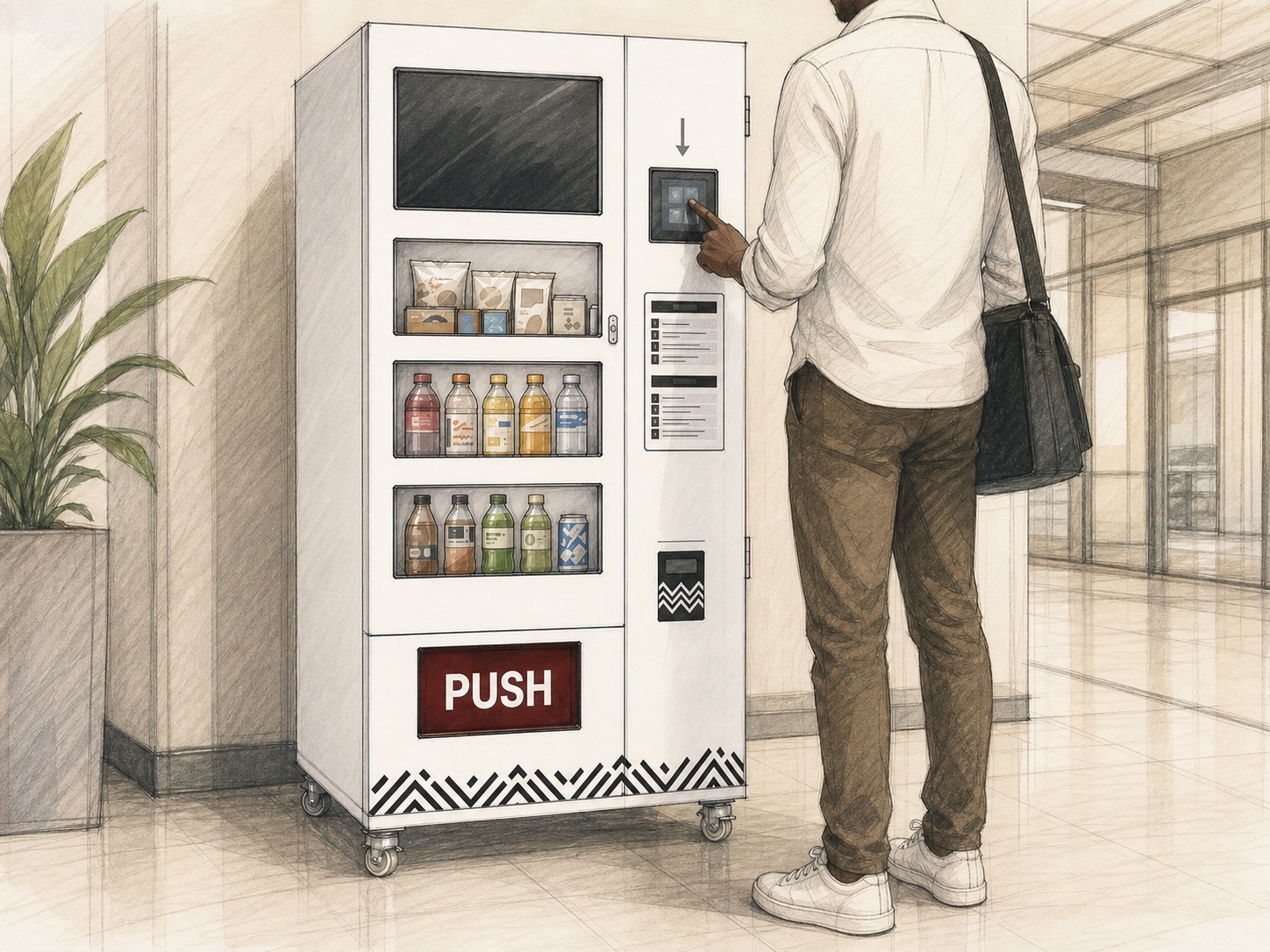
A customer should understand the price, how to authorise payment, when the machine has received confirmation and what happens next. Instructions should be short and visible. The process should avoid asking customers to interpret technical payment language.
Drifter is designed around Mobile Money vending in Rwanda, connecting the touchscreen experience with payment and machine control. The precise payment configuration is confirmed for each deployment.
Remote confirmation and operational records
The vending system needs to associate a payment with the correct machine and product selection. Operators also need records that help reconcile sales, investigate exceptions and understand whether a failure happened in payment, communication or dispensing.
Operational considerations
Connectivity quality, provider availability, transaction fees, settlement, customer support and recovery from interruption should be considered before launch. Test the workflow under real network conditions and define what happens if confirmation is delayed.
Mobile Money is one part of a dependable vending service. Product availability, machine uptime, clear communication and local technical support still determine whether customers trust it.
This guide provides general commercial and operational information, not a promise of earnings or a substitute for evaluating a specific site and agreement.